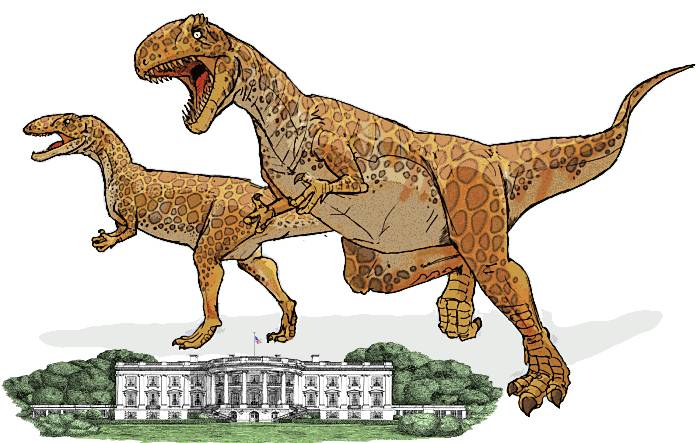
 When my nephew Eugene was nine, he knew exactly what he wanted to do when he grew up. For starters, he would become President of the United States, having successfully run on a platform in which he promised (1) every city would have its own dinosaur museum, (2) everyone would take the bus to work, and (3) restaurants would have to make extra sandwiches every day to give out to the homeless. After serving two terms, he would then become an elementary school teacher, raise hamsters, live in a tree house, and maybe learn to play the cello. He also said that if I hadn’t married by the time he did all of these things, he would marry me himself and I could pen his best-selling memoirs.
Ah youth! When you’re young, you never really see any obstacles that stand between Here and There. In my own generation, kids who were asked what they wanted to be when they grew up would say things like, “I’m going to cure all the diseases in the world,” “I’m going to enter the Olympics and win every medal,” “I’m going to discover another planet and fly there in my own rocket.” Reality, of course, has a pesky way of derailing some of those fanciful aspirations. I might have become a championship ice skater, for instance, if I hadn’t discovered in second grade that you had to be able to skate backwards. (I’m pretty sure it’s all done with mirrors and holograms.) Writing, however, was a career that promised a much longer shelf life and carried much less risk of physical injury. When I began talking at school about wanting to write books someday, I was fortunate to have a succession of teachers who encouraged me and, later, publishers who encouraged me even more.
Ask kids in the current generation what their dream is and quite a few may respond, “Be rich and famous.” Okay, rich and famous for doing what? This is usually followed by eye-rolling and a shrug. The correlation between working hard and applying oneself to make a difference has gotten lost in the pervasive media noise and bright lights of seeing badly behaved, self-absorbed celebrities enjoying a glam lifestyle and spending money as if there were no tomorrow. As an illustration, there were two tweens behind me in the grocery store checkout line the other day, both of them a-giggle about the new Kim Kardashian iPhone app in which players climb the ranks to A-list Hollywood status by shopping extravagantly, having dates with hotties, and being seen in all the right places. “I sooooo want to be just like Kim!” one of them declared. “Me, too!” her friend echoed. I couldn’t help but reflect that my Barbie doll in the 1960’s demonstrated far more depth by exploring careers in law enforcement, medicine, aerospace, ballet, business, education, and fashion design. With every corresponding outfit I bought her, I was inspired to actually go read about those careers (if for no other reason than she could talk intelligently about them to Ken, Midge and Skipper). To no great surprise, a limited edition set of Kardashian dolls is now rumored to be in development to keep “Barbs” company and friend her on Facebook. One shudders to imagine what will come of this in shaping the future career choices of impressionable young minds.
I’m often asked when it was that I first knew I wanted to be a writer. In looking back, I’m hard-pressed to remember a single time that I wasn’t writing. Nor can I imagine a more fulfilling way to make a living than doing something that comes as naturally to me as breathing. It’s therefore, exciting to talk to kindred spirits who can’t wait to get up every morning because they, too, know they’ll be spending the whole day ahead doing exactly the kind of work they love.
This month’s issue showcases some of those journeys and the epiphanies that made them come true.
Intuition – Your Compass for Success – by Sarah Yip
A Curious Journey to Success: The importance of Staying Flexible in Business – by Rune Sovndahl
Developing an App Before I even Owned a Smart Phone – by Kate Schwarz
Word of Mouth Lasts Longer Than Excessive Marketing Campaigns – by Wilhelmina Ford
Riding the Waves of Small Business – by Fleur Allen
*****
As for Eugene, he came out as gay in his senior year of high school, got his first job working at a neighborhood Jamba Juice, and discovered his true calling was in making smoothies. Sixteen years later, he’s still there and happy as a clam. Learning the cello is still on his bucket list.
 Media Magnetism
You must be logged in to post a comment.