Grown-Up Dreams


WH and dinosaursWhen my nephew Eugene was nine, he knew exactly what he wanted to do when he grew up. For starters, he would become President of the United States, having successfully run on a platform in which he promised (1) every city would have its own dinosaur museum, (2) everyone would take the bus to work, and (3) restaurants would have to make extra sandwiches every day to give out to the homeless. After serving two terms, he would then become an elementary school teacher, raise hamsters, live in a tree house, and maybe learn to play the cello. He also said that if I hadn’t married by the time he did all of these things, he would marry me himself and I could pen his best-selling memoirs.

Ah youth! When you’re young, you never really see any obstacles that stand between Here and There. In my own generation, kids who were asked what they wanted to be when they grew up would say things like, “I’m going to cure all the diseases in the world,” “I’m going to enter the Olympics and win every medal,” “I’m going to discover another planet and fly there in my own rocket.” Reality, of course, has a pesky way of derailing some of those fanciful aspirations. I might have become a championship ice skater, for instance, if I hadn’t discovered in second grade that you had to be able to skate backwards. (I’m pretty sure it’s all done with mirrors and holograms.) Writing, however, was a career that promised a much longer shelf life and carried much less risk of physical injury. When I began talking at school about wanting to write books someday, I was fortunate to have a succession of teachers who encouraged me and, later, publishers who encouraged me even more.

Ask kids in the current generation what their dream is and quite a few may respond, “Be rich and famous.” Okay, rich and famous for doing what? This is usually followed by eye-rolling and a shrug. The correlation between working hard and applying oneself to make a difference has gotten lost in the pervasive media noise and bright lights of seeing badly behaved, self-absorbed celebrities enjoying a glam lifestyle and spending money as if there were no tomorrow. As an illustration, there were two tweens behind me in the grocery store checkout line the other day, both of them a-giggle about the new Kim Kardashian iPhone app in which players climb the ranks to A-list Hollywood status by shopping extravagantly, having dates with hotties, and being seen in all the right places. “I sooooo want to be just like Kim!” one of them declared. “Me, too!” her friend echoed. I couldn’t help but reflect that my Barbie doll in the 1960’s demonstrated far more depth by exploring careers in law enforcement, medicine, aerospace, ballet, business, education, and fashion design.  With every corresponding outfit I bought her, I was inspired to actually go read about those careers (if for no other reason than she could talk intelligently about them to Ken, Midge and Skipper). To no great surprise, a limited edition set of Kardashian dolls is now rumored to be in development to keep “Barbs” company and friend her on Facebook. One shudders to imagine what will come of this in shaping the future career choices of impressionable young minds.

I’m often asked when it was that I first knew I wanted to be a writer. In looking back, I’m hard-pressed to remember a single time that I wasn’t writing. Nor can I imagine a more fulfilling way to make a living than doing something that comes as naturally to me as breathing. It’s therefore, exciting to talk to kindred spirits who can’t wait to get up every morning because they, too, know they’ll be spending the whole day ahead doing exactly the kind of work they love.

This month’s issue showcases some of those journeys and the epiphanies that made them come true.

Intuition – Your Compass for Success – by Sarah Yip

A Curious Journey to Success: The importance of Staying Flexible in Business – by Rune Sovndahl

Developing an App Before I even Owned a Smart Phone – by Kate Schwarz

Word of Mouth Lasts Longer Than Excessive Marketing Campaigns – by Wilhelmina Ford

Riding the Waves of Small Business – by Fleur Allen

*****

As for Eugene, he came out as gay in his senior year of high school, got his first job working at a neighborhood Jamba Juice, and discovered his true calling was in making smoothies.  Sixteen years later, he’s still there and happy as a clam. Learning the cello is still on his bucket list.

 

Taking the Show Off the Road

HPRC road show

When you’re on the cusp of an exciting new venture – a marriage, a dream job, a perfect house – “How am I going to get out of this?” is probably the farthest question from your mind. With the exception of certain politicians who spend their entire term campaigning for re-election (or the next higher office), most people approach each of these unfolding chapters with the expectation of settling in for the long-term and being happy as a clam. When you’re bright-eyed and effusive with optimism – and especially when you’re a solo business owner – it’s rarely in your wheelhouse to consider things like exit strategies on the very first day you hang out a shingle. Yet given the number of elements that can impact both your professional sustainability and your personal growth, it’s never too early to take a long view of where that path could eventually lead you…and whether you’ll want to stay on it.

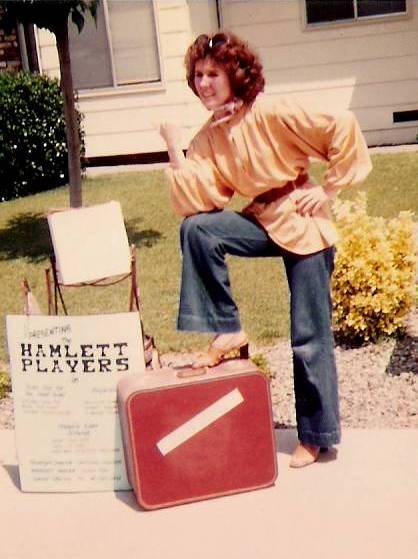
In the summer of 1978, I started a touring theater company. The common assumption was that it represented a transition from acting to directing/producing. The true agenda, however, was to address a longstanding problem I had observed from years of treading the boards in community and college productions; specifically, the practice of directors always casting the same actors in every show. As I often told people, landing your first role in a play is not unlike getting your first credit card. Everyone would love to give you one as long as someone else has already proven you’re a good risk. Despite all the training I was providing aspiring thespians on how to ace an audition, directors tended to look with disdain on anyone who showed up at try-outs with an empty resume.  One such person I had formerly worked with even went so far as to say, “My shows are much too important to risk on unknowns.” Since I saw the creative potential of the enthusiastic newbies in my workshops, the obvious test of what I was teaching them about the craft of acting was to start my own troupe and cast them myself in a diverse range of roles to hone their skills on stage.

Was it challenging? Yes. Was it sometimes vexatiously crazy?  Yes. Was it gloriously fun? Yes, yes, a thousand times yes. Not only was I accomplishing what I’d set out to do by opening doors that had previously been closed to fledgling actors but the company was also providing a platform to develop my playwriting expertise. “I could do this forever,” I remember thinking.

Until I hit the 8-year mark.

The inciting incident was catching the worst cold and sore throat of my life. Although I wasn’t contagious, I felt wretched. Further, I was acting in one of the productions and my voice was about to go out at any moment. I turned to my assistant director and told her that she might have to go on in my place. Instead of sympathy, I got indignation. “You’re not supposed to get sick!” she shot back.

Apparently I must have missed that memo.

Perhaps it’s because I always made everything look effortless (which it truly wasn’t), I was never supposed to get sick, be tired, need a break or take a vacation. As is often the case when you’re the boss of your own business, the line between a work life and a home life gets so fuzzily blurred that you wake up one day and realize it’s not a healthy pattern to continue indefinitely (no matter how much you loved it at the beginning). I had also reached a point of starting to assess which one of the three things I did best – acting, directing and writing – would have the longest (and most portable) shelf life.

The subsequent decision to focus 100 percent on my writing meant that the show, sadly, would have to go on without me. Having already trained a handful of assistant directors to lighten the rehearsal load, I approached them with the idea of their collectively continuing the company after my departure. The reaction was unanimous: “It’s too much work.”  While many of my actors were happily treading the boards in productions all across town, there were just as many still with me who felt my decision was selfish. “How can you end something you yourself started?” they asked. There were even those who equated “quitting” with “failure,” despite eight years of success. The latter, I think, especially applies to the mindset of any sole proprietor  who – following the hoopla of  a grand opening – realizes one day that they’re just no longer passionate about baking designer cupcakes, doing consulting, or publishing other authors’ ebooks.

The answer is that everything which ends means the start of something new. And in the end, taking a step out of your comfort zone and off a familiar path can lead to destinations you never imagined possible.

*****

Here’s this month’s line-up of guest blogs:

Lost that Loving Feeling? 10 Tips to Help You Re-ignite Your Passion at Work – by Jennifer Martin

What Media Monitoring Can Tell You about Your Brand – by Elizabeth Victor

Grow a Company, Without It Being About YOU – by Kritika Ashok

The Curse of the Over-Qualified

Trophies

The office manager regarded me with a critical squint as he looked up from the copy of the resume I’d brought with me to the interview. “You seem to be over-qualified,” he remarked.

Of all the statements he might have made, this was clearly the one I was least expecting. Yes, I could type at 75 words per minute (w/o any errors), had a shorthand speed of 140+, was an excellent speller and proofreader, had a good education, and even possessed a modest string of publishing credits.

“Excuse me?” I said.

He removed his glasses and folded his hands atop his desk. “You’re much too qualified for this job. You’d probably be bored after the first day.”

What’s interesting to note here is that the only difference between the job I currently had and the one I was applying for was a 3% pay increase and a shorter commute.

I was also only a few months short of my 21st birthday. It struck me – as I’m sure it does most readers – that already being over-qualified at such a young age didn’t bode well for future career advancement. I candidly asked him what he thought I should do about it.

This being the 1970’s when prospective employers were saying all kinds of mindlessly inappropriate things – especially to females – he shrugged and replied, “You might want to think about dumbing down your resume.”

It was neither the first time – nor the last – that my credentials would be perceived as a negative. As recently as a month ago, my application to privately tutor aspiring writers garnered the response, “Oh, I’m afraid that you’re much too professional and over-qualified to mentor our students. I really can’t see why you’d even be interested in this.”

Hmm. Is it possible that it’s just because I love the craft of writing? That it’s rewarding to me to be able to ignite imaginations? To help others hone their wordsmithing skills? That I wouldn’t have applied if I didn’t have the time, commitment and passion to do the best possible job? That I truly think teaching others is fun and isn’t that a good enough reason? I was tempted at this point to insert a maniacal laugh and say, “Well, since you asked, I’ll tell you the truth.  You’re just another cog in my cunning plan for world domination…”

Whether it’s personal relationships or business, the more time you spend trying to convince someone that your awesomeness isn’t going to be a liability, the more opportunities you’ll lose being courted by those who recognize your worth from the get-go and, accordingly, can’t wait to put you on their arm or on their team.

As of this writing, a bachelorette friend of mine is lamenting that yet another lad has broken up with her on the excuse that, “You’re just so beautiful and smart and successful and confident that I don’t see us having a life together.” This, I tell her, is more of a reflection on him that it is on her. For in whatever context someone labels you as “over-qualified,” what they’re really saying is that they’re not good enough for you. And certainly since no one knows them better than they know themselves, the best thing you can do is believe them…and walk away.

*****

Here’s this month’s line-up of guest blogs:

From High Fashion Footwear Boutique Owner to Online Marketing Nerd – by Emilia Rossi

Don’t Believe The Hype About Online Business – by Magda de Berg

Who Owns That Image? – by Michael Wong


The 3 A.M. Call

Alarm Clock

My husband nudged me out of a deep sleep to say that my office telephone was ringing. I groggily rolled over, opened one eye, and took note that the bedside alarm was reading 3 a.m.

There is rarely anything promising about a phone call that comes at that hour. If you’re a parent, there’s the dread that one of your offspring has just been in an accident or is in jail. If you’re a business owner, the first thought is that there’s been a break-in at your store or a fire at the factory. If you’re the head of a country, it could mean anything from a terrorist attack to a giant asteroid plummeting toward Earth and anticipated to make impact in the next half hour.

Seeing as how I don’t fit any of these situational conditions – and also pretty sure that the lottery commission wasn’t calling to tell me I had this week’s winning numbers – I was hard-pressed to fathom who in their right mind was trying to reach me before the sun was even up. My husband watched as I padded out the bedroom door and down the hall. Whether as a show of support (in case it was a legitimate crisis) or just curiosity, he and the dog soon joined me.

The caller – one of my ghostwriting clients – was already leaving a peppy message, the gist of which was that he was working on his blog, got stuck trying to find the perfect phrase, and figured I could just give him one off the top of my head. Now it’s not as if this guy lives in – oh, say Holland, and that he didn’t do the time-zone math while he was having his lunch. We live in exactly the same time zone, which made his call all the more inexcusable. What possible urgency existed that he couldn’t have sent the same question via email to be opened when I was actually awake?

“So why didn’t you pick up?” my husband asked, recognizing I was peeved enough to deliver a well deserved earful to the caller for disturbing my slumber.

“Because I’m not due at work for another six hours,” I replied. And went back to bed.

When you’re a sole proprietor – and especially if you conduct the majority of your business from a home office – establishing and reinforcing boundaries is one of the biggest challenges. It’s not just about the need for a healthy balance between your personal and professional priorities; it’s about training your clients to respect that you’re not “on call” for them 24/7. In concert with this is a similar (mis)interpretation that “freelance” means you’re free day and night, weekends, holidays and even when you’re sick.

Granted, there’s going to be an emergency now and then that requires you to don your super-hero cape and go rescue someone. Readers be warned, however: the first time you bend your own rules, make non-emergency exceptions, and start answering your home office phone during dinnertime or at 3 in the morning, you’re giving your clients permission to devalue your time and services as well as your privacy.

Your business may not be brick-and-mortar but your mindset needs to embrace a steel resolve to keep it operating as professionally as possible.

Postscript: Within a few minutes of this post going live, I was asked whether I ever confronted the client about his 3 .m. call or just dismissed it. In no uncertain terms, he was firmly reminded of what my office hours are when I called him back. It’s unlikely he’ll ever be making that same mistake again.

*****

Here’s this month’s line-up of guest blogs:

Marketing Lessons From My Dog – by Jan Dunlap

Marketing Through Word of Mouth – by Garrett Mehrguth

Webinars: Both a Marketing and Sales Solution – by Leanne Hoagland-Smith

How to Survive an Economic Down Turn – By Cina Coren


Don’t Bring It All To The First Meeting

Grocery Cart

If a magician explained in advance all the detailed mechanics of a particular trick, would there still be a reason to stay for the actual performance? Arguably, there are those who might steal the trick once they saw how it was done and shamelessly stitch it into their own repertoire. On the flip side are those who would not only respect the magician’s craft but might also think, “If I could be that wowed seeing one illusion, I wonder what else this guy has up his sleeve!”

A correlation can be made to the wizardry of professional consulting, advertising design, and wordsmithing. Specifically, it’s a common practice in these industries to offer a free consultation, the purpose of which is to identify a prospective client’s needs, demonstrate one’s expertise to address those needs, and determine whether the respective personalities are a smart fit. The highest chance of such meetings failing to seal the deal is when the person making the pitch presupposes a level of loyalty that has yet to be forged and, thus, reveals all the tricks of the trade at the initial meeting. “You’ve certainly given me a lot to think about,” the listener says, not the least of which is now whether they need to hire an expert at all.

I recently interviewed a potential ghostwriting client who wanted to hire me to pen her screenplay idea about an obscure Italian painter. Starting her story in the wrong place and not giving her protagonist any compelling conflicts were just two of the problems inherent in this project; she had also put no thought into who its target market was. These things could be remedied, I suggested, if it were developed as a stage play instead of a movie. The intimate, real-time bond the actors could make with the audience would invite a deeper understanding of what fueled the artist’s passions and relationships with others. In response to her assertion that theater was too limiting for all the scenes she wanted, I pointed out that elements such as selective lighting, scrim curtains, platforms, stairs, and holograms could deliver far more visual variety than she thought. Further, theater patrons typically process information at a higher level of abstraction than movie goers; i.e., you can tell them a minimalist stage is a dense forest and they’ll “see” it without your having to bring on a single tree.

By the end of the consultation, she was excited but wanted to make her decision the following week. When she did, it was to inform me that – despite her lack of any playwriting experience – she was going to write the whole script herself rather than pay someone who had obviously divulged “everything about theater there is to know.”

Or did I?

Her belief that she had tricked me into giving her something-for-nothing was only an illusion. The reality – the portion of the iceberg not visible from the surface – is what I could have shown her about how to keep an audience spellbound.

*****

Here’s this month’s magical line-up of guest blogs:

Is Abundance Avoiding You – by Mandy Wildman and Wayne Porter

Ideas for Succeeding as a Business Person Overseas by Arpaparon Keasakul

Help Others, Help Yourself: Supporting Your Competitors in Business by Shane Russo


Never Use a Selfie For Your Headshot


Selfie

(Image Credit: Mindy Littman Holland)

Throughout the years that I’ve interviewed authors, artists and business owners for feature articles, I could easily fill a book with stories about the number of people whose same-day photo shoots exhibited some seriously questionable judgment:

  • The female real estate agent who channeled her inner Elvira and wore a neckline so plunging that it nearly met the hip-high slit of her black dress.
  • The unshaven car dealer whose hard stare and straight-line mouth looked more like a mug shot than a friendly invitation to visit his showroom.
  • The interior designer who insisted on being photographed against a “busy” wallpaper backdrop that clashed with the even “busier” print blouse she was wearing.
  • The hairy-chested deli owner who wore a tank top for the shoot and, when told that a shirt and tie would look more professional, asked why I couldn’t just use PhotoSuite software to add them.
  • The female orchestra conductor who wouldn’t remove her Jackie O sunglasses – even indoors – because her whole shtick was to look mysterious.

The growing trend of “remote” interviews via email, phone and Skype may have increased efficiency and accessibility to experts across multiple zip codes and time zones but it has also given rise to a new set of problems related to branding and image: the popularity of The Selfie. Whether these casual candids are shot at arm’s length, into a mirror, or with a self-timing camera on a shelf or tripod, they have become the latest excuse for people who think professional photographers charge too much for headshots. “Maybe down the road when I’m more established,” a debut author told me, “but for right now I can’t afford those kind of fees.”

Frankly, she can’t afford not to make that investment. The adage that you have to spend money in order to make money is especially true when it comes to the impression you want to leave with your prospective buyers. A bad DIY job is worse than doing nothing at all because it communicates two things: (1) you’re not successful enough to afford a high quality shoot and (2) you’re arrogant enough to believe that you know more about taking pictures of yourself than a trained studio professional.

That you didn’t take the time or spend the money to put your best face forward runs the additional risk of advancing the one message you never intended; specifically, maybe that same lack of effort was put toward the very product or service you’re trying to sell.

Here’s this month’s exciting line-up of guest blogs:

How Not to Work a Room– by Flo Selfman

Image Making 101 – by Jan Dunlap

6 Lucky Guerrilla Marketing Techniques for Brand New Businesses – by Hailey Harper

Is Traditional Marketing Still Relevant in the Digital Age? – by Archie Ward

Warning: This is What Bad Press Release Writing Looks Like – By Mickie Kennedy

Forget The Joneses: Why Keeping Up With Google Is Vital For Business – by Sarah Gray

Hopping Aboard the Ghost Ship

Are We There Yet 2

“It must be so fascinating to be a ghostwriter,” an interviewer once said to me. “Do you get to go to a bunch of séances?”

It took me a beat to realize this woman assumed I had built a professional career around talking to dead people. Silly as that sounds, it does speak to the fact that a lot of people are clueless about what ghostwriters do. Furthermore, they often confuse a ghostwriter’s role with that of an editor or collaborator. While there are certainly crossover tasks among these three, their actual distinctions are predicated on pricing, anonymity and risk.

As the saying goes, everyone has a book inside of them and – for today’s business owners – adding “author” to your professional profile speaks volumes about your credibility as a purveyor of products and services. Not everyone, however, has the time or skill sets to make that book – or, for that matter, blogs, articles and syndicated columns – a published reality, especially if they’re busy running a company and managing employees.

The obvious solution is to pay someone to be your silent (wordsmith) partner. The question is: How much “ghosting” do you want and need?

To use a seafaring analogy, you’d hire a ghostwriter just as you’d hire a master shipbuilder to deliver you to your desired port. For an agreed-upon price, the ghostwriter turns your concept into a marketable – and seaworthy – project, navigates the challenging waterways, and lets you take all the credit for the creation of that fabulous “vessel”.

In contrast, a collaborator is a partner with skills comparable to your own who builds the project alongside you, assumes an equal share of investment and risk, and expects the reward of both a split credit and half the profits.

An editor is like a painter who gives your DIY boat a fresh cover coat and some touch-up. If, however, an editor knows nothing about water-tight construction, scraping off barnacles, or how to avoid pirates and Krakens (publishing scams), don’t be surprised if you sink before you even get out of the harbor.

Lastly, neither ghostwriters nor editors receive remuneration beyond their professional fees, nor – unlike collaborators – do they participate in any pitching/selling of the finished projects. And, of course, all three arrangements require formal contracts to define ownership rights, timeframes and payments.

If you’re still not sure what type of kindred spirit could best assist you and your company, drop me an email at authorhamlett@cs.com with “Ghostwriting” in the subject line. I offer a free 30-minute phone consultation to discuss projects, answer questions, and provide reasonable quotes.

In the meantime, here’s this month’s exciting line-up of guest blogs:

Why Do Research Before You Incorporate A Business Name? – by Debbie Nguyen

The Self-Published Author as Entrepreneur/Small Business Owner – by R. Travis Shortt

When Should You Consider Someone From Outside – by Archie Ward

The Vital Leadership Question I Couldn’t Answer – by David Dye

How Integrating PR and Social Media Can Become a Partnership of Results – by Janette Speyer


Lining Up Your Ducks

Duck and Ducklings

When a mother duck takes her ducklings for their first swimming lesson, you never see her pose group questions like, “So is everyone ready to do this or shall we wait until tomorrow? Does this look like a good spot to start or do you like that slope over by the bridge better? Are all of you okay with getting wet or shall we just keep practicing our walking?” Nor do you ever see her push them from behind or go chasing after the stragglers. No, she simply steps into the lake, glides away and doesn’t look back to check and see if they’re following her lead. She knows that they are because (1) she’s the mom, (2) she projects confidence, and (3) she’s a natural born leader.

There’s a lot that can be learned from this tableau if you’re in charge of a team that’s venturing into uncharted turf (or surf). During the years I worked in both the private sector and state government, I had a plethora of managers who believed that every decision – no matter how small – had to be decided by committee and consensus, a strategy that all too frequently resulted in lost opportunities as well as loss of morale.

I think there’s also a collective sense that leaders don’t really work that hard because they make everything look easy; accordingly, duckling followers are often unaware of just how much vigorous paddling is going on beneath the surface in order to move forward until they have to actually hit the water themselves.

Lastly is the fact that newly hatched birds will attach themselves to whatever they see when they first open their eyes. In most cases this imprinting occurs with a parental whom they will happily follow hither and thither as loyally as if they were connected by an invisible string. Thus, the scamper down to water’s edge is a no-brainer; If Mom’s going somewhere, it has to be someplace interesting.

As a parallel, consider what type of imprinting transpires on a new employee’s first day in the office. If you, their leader, aren’t there to show them around, don’t be surprised if their initial attachment is to whoever is available, friendly, and eager to show them the ropes. If it’s the office gossip or, worse, a competitor for your job, we’ve got a sinking feeling about where this will go.

Here’s this month’s exciting line-up of guest blogs:

Why Having a Business Blueprint is Necessary for the Success of Your Business – by Amandah Blackwell

2 Most Critical Event Mistakes & How You Can Avoid Them – by Diane Conklin

Entrepreneurial Failures – 9 Killer Mistakes Made By Entrepreneurs – by Kayy Egal

Tips for Engaging Followers on Facebook and Twitter – by Gina Mason


Short-Cuts, Quick Fixes, and Thinner Thighs in 30 Minutes

hourglasses

Legend has it that the custom of making New Year’s resolutions dates back to the time of Julius Caesar and that they were embraced with the intention of learning to treat others with greater kindness. With the passage of centuries, however, the January 1st tradition segued into self-serving quests, the majority of which involve losing weight, achieving health, shedding addictions, acquiring wealth, and moving up the corporate ladder. Not surprisingly, the ongoing gloom of a wobbly economy is prompting many a wisher to add “become my own boss” to the list of New Year’s goals. Maybe you’re one of the 40% of Americans who annually stride with gusto into a bold journey of adventure and reinvention, only to lose steam by mid-February because results aren’t as immediately forthcoming as you had hoped they’d be six weeks previous.

So what, exactly, is it that distinguishes the scant 8% who stay the course and see their resolutions not only take root but magnificently blossom?

The difference is that they actually make A Plan.

“If you don’t have time to do it right,” wrote American basketball coach John Wooden, “when will you have time to do it over?” His popular quote about how to play – and win – a game has as much application to building a company as it does to building lasting relationships. Much too often the mindset of Instant Now causes people to rush headlong into promises, start-ups and even matrimony without considering Strengths, Weaknesses, Energy, Access and Time. If you like acronyms, it’s all about SWEAT.

The author wannabe who thinks that (1) publishing is glamorous and (2) s/he only has to write one book in order to retire is little different from the person who assumes that just because she likes to bake cupcakes (but has absolutely no marketing background or business management experience), customers will flock to her door from the very first day.  Likewise, the woman – or man – whose biological clock is ticking will more likely skip the friendship and courtship stage because racing to the altar takes precedence over considering what a successful marriage really entails. By only focusing on an end result instead of taking the time to create realistic, incremental steps and accessing the tools and resources necessary to reach that goal, failure is inevitable.

Every reward – and every resolution – carries its own share of risks. You have the power to mitigate those risks, however, by clearly defining what it is you want (and whether it’s feasible), what it means to you, what sacrifices you’re prepared to make, and whether you honestly have the passion and perseverance to go the full distance.

Want to share your 2014 goals and game plans with Media Magnetism readers? Drop me a note at authorhamlett@cs.com for instructions on how to participate. As this new year unfolds, we’ll be publishing the best entries.

Meanwhile, here’s this month’s exciting line-up of guest blogs:

The Dr. Jekylls and Mr. Hydes of Business Leadership – by Leanne Hoagland-Smith

8 Pointers for Keeping Your Blog Fresh and Growing – by John Terra

What is Advocacy PR?by Mickie E. Kennedy

5 Tips For Making Your First Interview Experience A Painless One – By Tony Wilkins

Here’s to a stellar 2014. Make it a great one!


Back-Scratching Backlash

back

“You do something nice for me and I’ll do something nice for you.”

If as business owners, authors and entrepreneurs we embrace the spirit of all being in this world together, it should come as second nature to want to be helpful – to provide an enthusiastic referral, to pen a helpful review on Yelp, to facilitate networking by introducing kindred spirits who might not have met one another on their own. Sooner or later, however, you’re likely to encounter individuals who aggressively play the guilt card and expect – nay, demand – a favor of equal (or even superior) value. How many times, for instance, have you received an endorsement for skill sets from LinkedIn members that you have not only never worked with but have also never met? Oddly enough, some of that virtual applause is for talents you might not even have. (Just last week I was endorsed for my expertise in metallurgy, dog grooming, and holistic healing. Hmmm.)

Not surprisingly, the psychology behind a total stranger dispensing compliments is often to start a relationship that will lead to reciprocal praise and/or seal a deal. Salespeople, for example, typically open a conversation with a flattering remark about your hair or an item of apparel you’re wearing. By making you feel good about yourself, you’re agreeable to making them feel even better by purchasing something for which they’ll get a commission. Likewise in an exchange this brief, there’s no reason for either side to take it personally if the sale doesn’t happen.

Consider the shift in dynamic, however, if an opinion – either requested or unsolicited – isn’t what the recipient was hoping to hear. The slope gets even more slippery when there’s an implicit expectation of mutual fawning and glee.  Nowhere is this more in evidence than in the practice of reciprocal product reviews.

First and foremost, the goal of any feedback is to identify what’s being done well and what elements warrant improvement. The more constructive the comments – “the third act could be tightened,” “the lounge thermostat is set too high,” “the on-hold music is a little loud” – the more chance there is to verify a problem exists, explore options and incorporate remedies. Criticism, of course, is subjective. If 10 people independently kvetch about 10 different things, it’s different from 10 people that unanimously agree your employees are all surly and could benefit from some anger management classes. It also goes without saying that the credentials of those who volunteer their opinions should be taken into consideration. On many occasions, for instance, aspiring screenwriters send me their scripts along with a smiley-face note that says, “My mom thinks this is the best thing I’ve ever written!” Yes, well, isn’t it nice your mom is supportive but I’m guessing she has no film industry experience for that claim to hold any water.

Lastly, what if someone writes a 5-star book review for you on Amazon and then asks if you’d review theirs? Is there an obligation on your part to be equally effusive?  If your honest opinion is that it’s mind-numbingly awful – and you’re judicious about guarding the value of your word and professional reputation – the answer is “no.” In a competitive context, it’s like giving every participant an “A” or a blue ribbon just so no one’s feelings will be hurt. Ultimately, a false award has as little meaning to the person who excelled as it does to the person who simply showed up and did nothing.

A few months ago I found myself the recipient of a string of vitriolic emails stemming from my assignment of 3 stars to a series novel that had wobbly structure, repetitive dialogue, unlikable characters and multiple typos.  Although I clearly wasn’t the author’s target audience (and stated that upfront in my review), I nonetheless respected what she was trying to do as a storyteller and imparted suggestions on how she could hone her craft to one day reach a broader demographic. While I rarely allow authors to preview my critiques, I had made an exception in this case based on amiable correspondence in our introductory phase and gave her the option to decline the post if she wanted to use it for instructional purposes only.

Her first response was shock that I’d jeopardize her book sales by giving her less than a 5. My respectful agreement not to publish my opinion should have been the end of the conversation. Instead, it escalated to a succession of accusations that (1) I clearly didn’t “get” her message, (2) I obviously hadn’t even read the whole thing, and (3) I was totally jealous of her enormous talent and was purposely trying to suppress her voice. And though I had long since withdrawn from any further communications, it didn’t stop her from her final conclusion that (as a Caucasian) denying her a 5 meant that I was obviously a racist. “Oh and by the way,” she added, “I only gave you a 5 because I thought we were going to become BFFs.”

As the saying goes, with friends like that, who needs enemies?

Here’s this month’s exciting line-up of guest blogs:

No Email, No Phone: Plenty of Room for Inspiration to Grow Your Business – by Blair Thomas

The Power of Color in Marketing Campaigns – by Manilyn Moreno

Why Customer Service Should be Integrated into Your Marketing – by Eric Thomas

Branding Risks and Rewards of Social Media – by Derek Whitney

*****

Whether your end-of-year plans involve staying at home or traveling afar to be with your family and friends, my Media Magnetism colleagues and I wish you a safe, warm and joyous holiday.

See you in 2014!

Thanksgiving megan chromik flickr